I knew them before they were cool.

Leslie Guerin • January 22, 2026

On music, Pilates, and the strange urge to prove you were there first

When we’re teenagers, being the first to discover something feels like a personality trait.

The first to hear a band.
The first to know a lyric.
The first to say, “They’re going to be huge.”

There was (and still is) a certain cultural currency in being early. Stories would always start the same way: “I saw them in this tiny venue before anyone knew who they were.” Or, “They used to open for so-and-so before they got famous.”

It wasn’t really about the music.
It was about proximity to cool.

Being early meant you had taste.
Being early meant you were in the know.
Being early meant you belonged to something before it became mainstream.

And if you weren’t early?
Well… you were late to the party.

The Band Guys

My first husband and I met in high school, and I remember one of our earliest recurring arguments wasn’t about anything dramatic, it was about music.

He wanted to talk about bands I had never heard of. Bands that would never be played on the pop radio station I listened to religiously. Bands that existed mostly in basements, obscure clubs, and record shops that smelled like dust and ambition.

I remember rolling my eyes.

Not because the music was bad, but because I simply didn’t care about being the first to know. I liked what I liked. I wanted the songs everyone else knew. I wanted the ones I could sing in the car. I wanted the ones that didn’t require a personality dissertation to explain.

I was, in every sense of the word, mainstream.

And I stayed that way for most of my life.

Enter Pilates (Accidentally)

The funny part is that the only reason I am now considered “early” in Pilates culture is because it became my job.

Not because I was chasing underground trends.
Not because I was trying to be niche.
Not because I wanted to discover something before the world caught on.

Simply because I picked a career… and stuck with it.

I started teaching Pilates during a time when:

  • the word Pilates itself was tied up in a massive lawsuit
  • studios were still explaining what a Reformer was
  • most people thought it was either physical therapy or a celebrity fad
  • barre didn’t exist as a category yet
  • and group fitness didn’t take Pilates seriously at all

I was trained at the studio that brought barre to the US.
I taught before Instagram.
Before hashtags.
Before “Pilates girlies.”
Before it was cool, aesthetic, or algorithm-friendly.

As my mother would say, I’ve been doing this “since Hector was a pup.”

Which is both hilarious and deeply accurate.

The Urge to Prove You Were There

Here’s the strange thing I’ve noticed recently:

As Pilates has exploded into mainstream culture, I’ve felt this subtle internal urge to prove that I was one of the first.

To say:

  • I taught before it was trendy
  • I trained before it was polished
  • I built studios before it was profitable
  • I stayed when others pivoted

And I catch myself thinking:

Should I say that more?
Should I tell people my origin story louder?
Should I defend my place in this space?

Which is ironic, because I have spent most of my life being completely uninterested in being early to anything.

I didn’t care about underground music.
I didn’t care about being cool.
I didn’t care about cultural capital.

The only reason this even matters now is because Pilates has become popular, and popularity activates a very human instinct:

Don’t forget about me. I was here before the crowd.

When Your Job Becomes a Trend

There’s something surreal about watching your entire profession turn into a social identity.

Pilates is no longer just a method.
It’s a lifestyle.
An aesthetic.
A personality.
A marketing angle.
A content category.

It’s on TikTok.
It’s on Netflix.
It’s in fashion campaigns.
It’s in memes.

And I think part of why longtime teachers feel strange about this is because we didn’t enter a trend.

We entered a trade.

We learned anatomy.
We studied injuries.
We worked with real bodies.
We taught in quiet rooms with mirrors and awkward lighting and clients who didn’t want to be filmed.

We weren’t building a brand.
We were building a skill.

So when the world suddenly acts like it just discovered Pilates, there’s a natural reflex to say:

Actually… we’ve been here the whole time.

The Difference Between Being Early and Being Consistent

Here’s the truth I’ve landed on:

I wasn’t early because I was ahead of the curve.
I was early because I
stayed.

That’s it.

I didn’t jump industries.
I didn’t pivot to trends.
I didn’t reinvent myself every five years.

I’ve had the privilege, and I truly mean that,  of having one singular job for my entire career.

Not many people get that.

And I’m good at it.
Like… dammit, I’m actually really good at it.

Not because I’m cooler.
Not because I’m more original.
But because I’ve had
thousands of hours of repetition.

Which, ironically, is the least sexy form of credibility.

Why I Don’t Actually Need to Prove Anything

The older I get, the more I realize:

Needing to prove you were there first is usually a sign that you’re afraid of being forgotten.

But good work doesn’t disappear just because something becomes popular.

If anything, popularity creates more need for:

  • skilled teachers
  • thoughtful programming
  • ethical education
  • and people who understand nuance

The industry doesn’t need more “firsts.”
It needs more
depth.

And depth can’t be faked.
It only comes from time.

From Cool to Craft

Teenage culture is about being cool.
Adult culture is about being competent.

One is loud.
The other is quiet.

One needs validation.
The other just needs results.

And maybe that’s why this whole thing feels funny to me.

I spent my youth being mainstream.
And now I find myself accidentally niche, simply because I never left.

Not because I wanted to be different.
But because I wanted to get better.

The Real Flex (It’s Not Being First)

The real flex isn’t:
“I knew them before they were cool.”

The real flex is:
“I stayed long enough to actually know what I’m doing.”

And in a world obsessed with discovery, novelty, and staying is radical.

Staying means:

  • watching cycles repeat
  • seeing trends come and go
  • understanding what lasts and what doesn’t
  • and trusting that mastery is quieter than hype

Which, honestly, feels way more aligned with who I’ve always been anyway.

Full Circle

So maybe the teenage urge to be first never really goes away.
It just changes form.

Back then it was about bands.
Now it’s about Pilates.

But the deeper lesson is the same:

Being early is luck.
Being consistent is a choice.

And I’ll take consistency over cool any day.

Call to Action

I’m curious:

What’s something you discovered “first” a band, a show, a trend, a place, that later became mainstream?

And do you still care that you were early…
or do you just enjoy that you were part of it at all?

Tell me, please, I love these stories.


By Leslie Guerin February 2, 2026
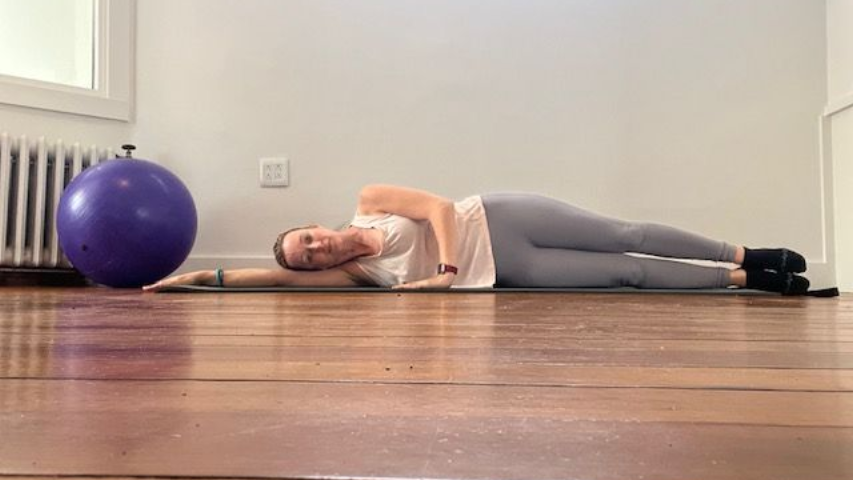
Stability Is Not Stillness — It’s Organized Effort “Hold still.” If you’ve ever taken one of my classes, you’ve heard me say it. And if you’ve ever felt it, you know it isn’t about freezing. Most of the time when a teacher says “hold still,” it’s because something else is happening. Maybe bouncing, gripping, bracing, or compensating of some kind. Something is moving that shouldn’t be. But “hold still” does not mean “be still.” Those two cues might sound similar, but in Pilates they mean very different things. Be Still vs Hold Still Be still is a pause. It’s a full stop. It’s often used so you can feel one specific thing: “Be still… feel your ribs.” “Be still… notice your pelvis.” “Be still… now breathe.” It’s about attention. Hold still is something else entirely. Hold still means: Stay organized Stay lifted Stay connected Stay breathing You are not passive. You are not collapsed. You are actively maintaining shape while something else moves. It is one of the most advanced skills in Pilates. Why Teachers Say “Hold Still” We say it when we see: The pelvis shifting The ribs popping The shoulders helping Momentum sneaking in The body is trying to get the job done by recruiting the wrong helpers. So “hold still” is really a request for clean movement : Let only the part that is supposed to move… move. Everything else must work just as hard, just not by changing position. Side-Lying Leg Lifts: The Perfect Example Let’s take one of the most deceptively simple exercises in mat Pilates: Side-lying leg lifts. On the surface, it looks like this: You lie on your side You lift the top leg You lower it But what is really happening is far more complex. This exercise is designed to balance one side of the body on the other . The top leg moves. The rest of the body holds still. Not rigid. Not collapsed. Not gripping. Holding. What “Hold Still” Actually Means Here While the top leg lifts and lowers: The bottom side of the body is working. The bottom rib cage is lifted off the mat, creating space The waist is long, not sagging The spine is stacked, not rolled back The top hand in front of the body is not there to lean on, it is there to quiet the rocking forward and backward. The pelvis stays level. No tipping. No hiking. No rolling. Everything that is not the leg is holding still... but nothing is relaxed. This Is Why Breathing Matters If you stop breathing, you are not holding still. You are bracing. Holding still means you can: Maintain the shape Keep the effort And still let the breath move That’s where the deep stabilizers do their job: The abdominals The muscles along the spine The lateral hip The inner thighs The breath becomes the test: Can you stay organized even while something else is moving? That’s real control. Why This Cue Changes Everything “Hold still” teaches the nervous system something incredibly important: You don’t create strength by moving more. You create strength by controlling what doesn’t move . That’s how: Hips become more stable Backs become more supported Movement becomes quieter and more powerful It’s also how injuries are prevented, especially in people who are flexible, mobile, or used to muscling through. So Next Time You Hear It… When I say “hold still,” I’m not asking you to freeze. I’m asking you to: Stay lifted Stay connected Stay breathing Stay honest Let the right thing move. Let everything else do its job. That’s Pilates.
By Leslie Guerin January 30, 2026
Small, regular efforts add up
By Leslie Guerin January 29, 2026
The Manual I Wish I Had When I Started Teaching Pilates
By Leslie Guerin January 28, 2026
A Thoughtful Approach to Barre, Mat Pilates, and Reformer Progression in the Modern Studio
By Leslie Guerin January 27, 2026
In Every Movement
By Leslie Guerin January 26, 2026
(And What to Say Instead)
By Leslie Guerin January 23, 2026
Why I Built a One-to-One, Self-Paced Teacher Training Model
By Leslie Guerin January 21, 2026
More Than Just Neck Comfort
By Leslie Guerin January 20, 2026
Why Moving Through the Work Can Be Just as Meditative as Holding Still
By Leslie Guerin January 19, 2026
Why pulsing isn’t about speed—and why it’s becoming a mark of mastery in Pilates
Show More