When People Say "Pilates Hurt My Back"

Leslie Guerin • April 5, 2025

 When People Say “Pilates Hurts My Back”—Here’s What I Know to Be True


I’ve heard it many times over the years—someone tries Pilates once or twice and comes away saying, “Pilates hurt my back.” And every time I hear it, I want to sit them down, look them in the eye, and say, “Tell me exactly what you did, and more importantly, how you did it.” Because after decades of teaching and a personal journey with injury and healing, I know that Pilates—when done well—is one of the most effective ways to help your back, not harm it.

In fact, when I herniated my L5-S1 during the pandemic, it was Pilates (and Barre) that brought me back to life—literally and figuratively. And I want to use this post to talk honestly about the disconnect between the intention of Pilates and the way it’s sometimes taught, how that gap leads to pain or misunderstanding, and how, done with care and awareness, Pilates can be one of the most powerful tools for restoring spinal health.

The Misconception: “Pilates Hurt My Back”

Let’s start here. Why do people say this?

For many, it’s a matter of bad instruction or poor form. Pilates has exploded in popularity over the years, which is both a blessing and a curse. While more people are exposed to its benefits, it also means there are more instructors out there with a wide range of training and understanding. It also means that group classes—especially big, fast-paced ones—might gloss over form and ignore modifications that are essential for people with injuries or imbalances.

If someone comes to class with a weak core, tight hip flexors, and little body awareness (through no fault of their own), it’s easy for the low back to do too much work, especially in exercises that involve spinal flexion or leg lifts. Add in a cue like “tuck your pelvis” without context or explanation, and suddenly that person is compressing their lumbar spine instead of supporting it.

So yes, Pilates can hurt your back—but only if it’s misunderstood, misapplied, or done without respect for the body’s current state. But that’s not Pilates’ fault.


My Story: Herniated Disc, Pandemic, and the Return to Movement

Let’s rewind to 2020.

When the lockdown happened, I quickly transitioned all of my sessions to Zoom. I was teaching often—sometimes multiple classes a day—and mostly demonstrating everything as I went. But I wasn’t paying attention to my own form. At the same time, my marriage was on the rocks, and in hindsight, I think my body was the first to say, “I’m tired. Start listening to me.” One morning, I literally couldn’t get out of bed. For weeks after, every time I stood up from sitting, it felt like my left butt cheek had been tasered. L5-S1. Herniated. Confirmed by imaging (and let’s not even get into how scared I felt inside that MRI machine).

I’ve been teaching Pilates since 2001. I’ve worked with people recovering from surgeries, managing chronic pain, dealing with osteoporosis, and rehabbing injuries. But suddenly, I was the one who couldn’t walk without limping, who couldn’t lie flat, who couldn’t sit for long without nerve pain.

In those first weeks, movement felt impossible. But I also knew—from experience and from my training—that I couldn’t just rest indefinitely. The key was smart, strategic movement. Not just any exercise, but intentional, gentle, spine-safe progressions.


Phase One: Barre + Reformer + Walking Pilates


Early on, I couldn’t tolerate lying down for traditional mat Pilates. Instead, I turned to standing work. I leaned into the first half of my Barre classes—the gentle pliés, the supported hip hinges, the glute activation. I modified every single thing and stayed deeply attuned to what made me feel better versus worse.

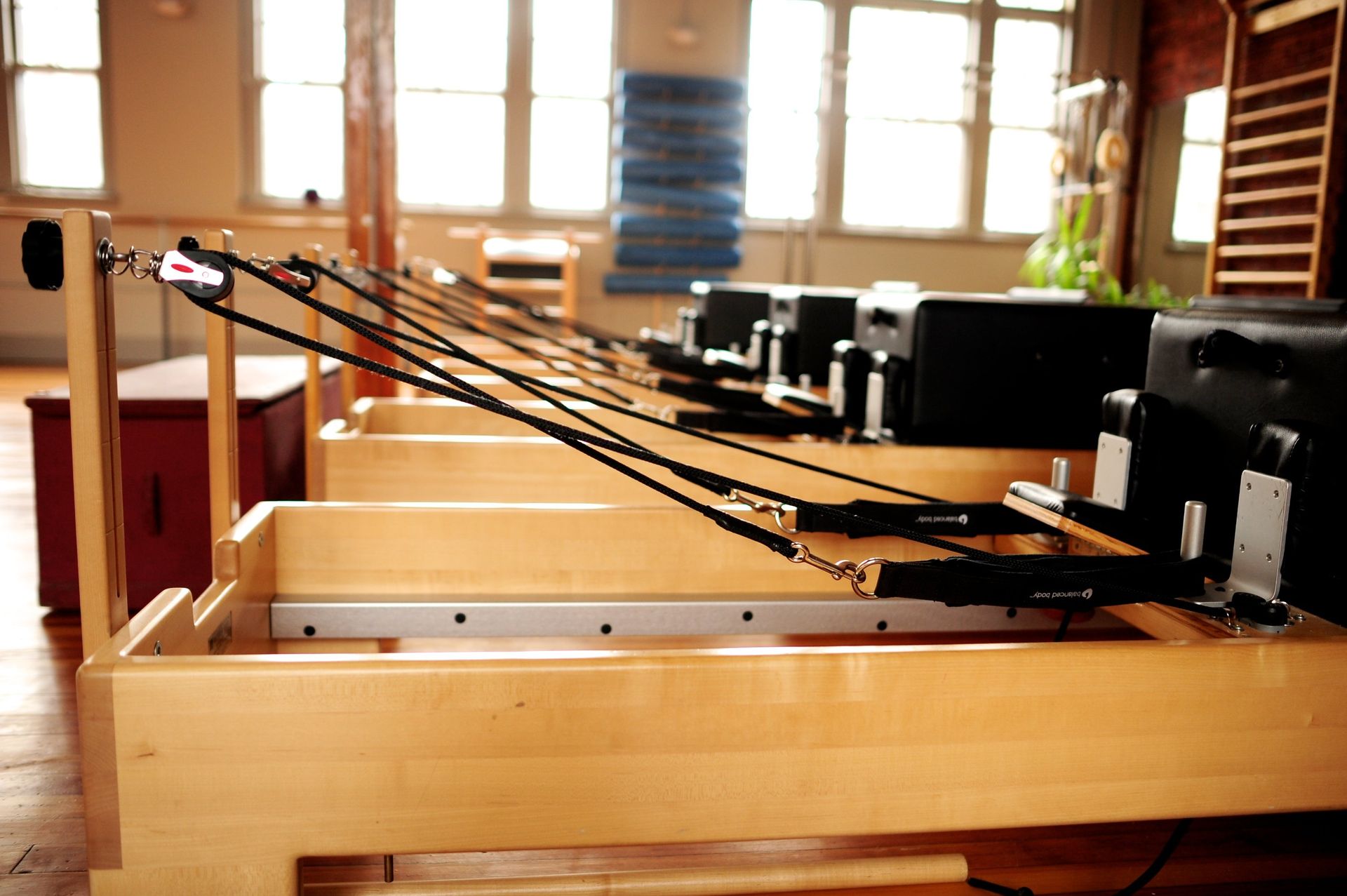
I also returned to the Reformer. The springs allowed me to load my muscles without compressing my spine. I focused on breath, alignment, and subtle core engagement. My goal wasn’t to get a “good workout”—my goal was to rebuild my connection to my body.

And then there were the walks. But not just regular walks. I called them “walking Pilates.” I paid attention to my gait, how I placed my foot, how I held my pelvis. I recruited my glutes and low abs. I used every step as a chance to relearn how to move mindfully.


Phase Two: Graduating to the Mat


Eventually, I reached a milestone: I could maintain a true c-curve without pain or compensation. This wasn’t just about being able to roll down. It meant my deep abdominals were firing again. It meant my body was working in harmony.

From there, I returned to mat Pilates with fresh eyes. I knew exactly what to avoid, what to emphasize, and what cues were critical to my healing. I skipped the flashy stuff. I stuck to basics—hundreds, single-leg stretch, spine stretch forward—but I did them with laser-sharp form and deep awareness.

The truth? Pilates didn’t hurt my back. It healed it.

Today, there isn’t a single exercise I used to do that I can’t do now. And I move better now—because I had to truly understand what my body needed to heal.


What Makes Pilates Heal Instead of Hurt?


The magic of Pilates isn’t in the movements themselves—it’s in the how of the movements.

Here are a few key principles I always return to, especially for clients with back issues:

  1. Spinal Articulation is Earned, Not Assumed
    If someone can’t maintain neutral pelvis and spine in a simple supine position, they have no business doing roll-ups or teasers. Start small. Teach the pelvis to move independently from the ribs and legs. Spinal articulation should feel supported, not forced.
  2. The Core is More Than Abs
    Your core includes the diaphragm, the pelvic floor, the deep abdominals (like the transverse), and the spinal stabilizers (like the multifidus). When we cue core engagement, we must speak to the whole system, not just “pull your belly in.”
  3. The Pelvis is Not Meant to Stay Tucked
    That brings me to my workshop—“Fuck the Tuck.” Yes, it’s a bold title, but for good reason. Chronic posterior pelvic tilting (tucking) compresses the lumbar spine and disengages the glutes and deep core. It’s a common cue in group classes that needs serious rethinking.
  4. Breath is Everything
    Without good breathing patterns, you can’t activate your deep core. Exhaling on exertion, finding lateral rib expansion, and coordinating breath with movement are essential tools for spinal health.
  5. Modify. Modify. Modify.
    There is no shame in bending the knees, propping the head, or staying at a simpler version of an exercise. Progress isn’t about ego—it’s about consistency and care.
  6. Form Trumps Fancy Every Time
    The Pilates world can get caught up in choreography. But a well-executed pelvic tilt is often more therapeutic than a flashy series of transitions. When the spine is recovering, less is more.

If You’re Reading This and Pilates Has Hurt Your Back…

…please don’t give up on it just yet.

Find an instructor who understands spinal mechanics, who asks questions before giving cues, who knows how to adjust to injuries. Don’t be afraid to speak up in class and ask for alternatives. And most importantly, listen to your body—not your ego.

You might not start with the Hundred or Roll-Up. You might start with breathing, bridges, and leg slides. That’s okay. That’s more than okay—that’s exactly where you should be.

Because from there, you build not only strength, but confidence. And that’s the real win.


Final Thoughts: Healing is a Journey, and Pilates is a Guide


Pilates gave me a roadmap back to myself. It gave me tools to rebuild after injury—not just physically, but emotionally. There is something profound about regaining agency over your own body after feeling betrayed by it.

I now teach from a place of lived experience. I don’t just believe Pilates helps with back pain—I know it does. I’ve felt it. I’ve taught it. I’ve seen it over and over again in my clients.

So the next time someone tells me, “Pilates hurt my back,” I’ll meet them with compassion—and an invitation. To explore again. To move differently. To try one more time—with better guidance, with greater awareness, and with the knowledge that healing is possible.


P.S. If you’re looking for classes designed specifically to support your spine—gentle, precise, and proven—I offer virtual sessions and on-demand programs, including Reformer, Mat, and Barre. You don’t need to “wait until you’re better” to begin. You start now, where you are, with what you have. That’s how healing begins.


By Leslie Guerin December 1, 2025
Why I Don’t Teach Pilates for Aesthetics — and What I Teach Instead 
By Leslie Guerin November 19, 2025
A Conversation with a 21-Year-Old Bartender That Says Everything
By Leslie Guerin October 27, 2025
And that's the point.
By Leslie Guerin October 24, 2025
Teaching Beyond Technique
By Leslie Guerin October 21, 2025
Without Losing Your Mind (or Bruising Your Thighs)
By Leslie Guerin October 20, 2025
The Art of Repeating Spring Changes on the Reformer
By Leslie Guerin October 3, 2025
Why Teaching Reformer Pilates Starts with Resistance
By Leslie Guerin September 17, 2025
Using the Pilates Reformer
By Leslie Guerin September 15, 2025
From Springs to Confidence
By Leslie Guerin September 9, 2025
Let’s be honest: we’ve all done it at some point. You’re rushing from home, work, or errands, and you head to a Pilates class without giving much thought to what you’re wearing underneath your workout clothes. You throw on leggings, a top, and—without hesitation—your regular bra. After all, it’s just Pilates mat. It’s not running or jumping. How much could it really matter? The answer: a lot. In fact, wearing a traditional bra to Pilates mat class is one of the most common and avoidable mistakes I see women make. It’s not just about fashion—it’s about biomechanics, spinal comfort, and setting yourself up for the best experience possible. What you wear directly affects how your body feels and functions in class. And while Pilates is all about building strength, mobility, and alignment, the wrong gear—especially the wrong bra—can sabotage your comfort, compromise your performance, and even contribute to back pain. Why the Regular Bra Doesn’t Work for Pilates A traditional bra is designed with one goal: to shape and support breasts under everyday clothing. Most are structured with: Rigid underwires that press against the ribcage. Narrow straps that dig into the shoulders. Hook closures that create pressure points along the spine. Materials meant for aesthetics, not breathability or movement. That’s fine when you’re sitting at a desk or going out for dinner. But once you lie down on a Pilates mat and start rolling, curling, flexing, and twisting, all of those design features work against you. Here’s why: Spinal Discomfort – Pilates mat work involves a lot of supine (lying on your back) positions. The hook-and-eye closure digs into your spine, making it impossible to fully relax into the mat. That constant pressure leads to tension and pain. Restricted Movement – Underwires and rigid fabrics restrict natural rib expansion. Pilates breathing is three-dimensional—it requires your ribs to expand outward and back into the mat. A stiff bra limits this, creating shallow breath and less effective core engagement. Strap Pressure – Narrow straps dig into your shoulders during roll-ups, teasers, or any exercise where arms are overhead. Over time, this creates tension in your neck and upper back, distracting you from the precision Pilates demands. Compromised Flow – Pilates is about finding flow and ease. If you’re constantly adjusting straps or wincing at a clasp digging into your back, you’re not flowing—you’re fidgeting. The Importance of Costume Choices in Pilates Joseph Pilates himself often referred to “contrology” as an art form, not just an exercise method. He cared about alignment, grace, and the whole-body experience. What you wear is part of that experience. Think of it as your “costume” for the role you’re playing in class: a student committed to moving with control, precision, and awareness. If your outfit is working against you—pinching, digging, or restricting—you’re not able to embody the method fully. When we talk about costume choices, we’re not talking about fashion statements or brand labels. We’re talking about gear that supports your physical comfort, safety, and performance . What to Wear Instead The good news? There are better options—gear that is designed for movement, breath, and spinal health. Sports Bras with Wide Bands Choose bras without clasps or underwires. Wide, flat bands distribute pressure evenly so there’s no digging when you lie on your back. Look for materials that are stretchy but supportive, allowing ribcage expansion. Straps that Support, Not Dig Racerback or cross-back straps often provide better distribution and freedom of movement. Adjustable but wide straps help customize fit without cutting into your shoulders. Seamless Designs A seamless sports bra reduces irritation from seams or hardware. The smooth surface also means less distraction when rolling or twisting. Breathable Fabrics Moisture-wicking fabrics keep you comfortable, especially in longer classes or when working deeply into your core. Breathability supports better skin comfort and prevents overheating. How the Right Gear Elevates Performance Some may wonder: “Isn’t Pilates gentle enough that it doesn’t matter?” Actually, it’s precisely because Pilates is subtle, precise, and deeply connected to body awareness that gear matters even more. When you’re wearing the right bra and clothing: You breathe better. Your ribs can expand, making core activation more effective. You move better. Nothing digs, pulls, or distracts you. You focus better. Your mind stays on alignment, not discomfort. You recover better. Less unnecessary tension means less strain post-class. Pilates is about efficiency. Every detail—your posture, your focus, your gear—affects how efficient your practice is. The Back Connection Why do I emphasize the back specifically? Because back pain is one of the most common reasons clients come to Pilates. When you wear a traditional bra in class, the hooks and underwires don’t just cause temporary discomfort—they can exacerbate chronic back tension. Imagine lying on a hard clasp for a 50-minute class: your muscles subtly guard and tighten around that pressure the entire time. That’s the opposite of what Pilates is meant to achieve. Pilates builds a strong, supported back by improving spinal mobility, core stability, and posture. Don’t undermine that by placing an uncomfortable piece of hardware directly under your spine. A Personal Note as a Teacher As someone who has been teaching Pilates and Barre for over 26 years, I’ve seen every wardrobe choice imaginable. I’ve seen clients show up in jeans, in slippery socks, in bras with enough underwire to set off airport security. And every single time, their experience was compromised—not because they lacked strength or effort, but because their clothing was working against them. When I suggest a gear change, it’s never about judgment. It’s about giving clients the best chance to feel what Pilates really offers. Once someone experiences the difference—lying comfortably on the mat, breathing freely, moving without distraction—they never go back. The Mental Shift: Valuing Your Practice Here’s the bigger picture: choosing the right gear isn’t just about avoiding pain. It’s about valuing your practice enough to set yourself up for success. You wouldn’t show up to a dance performance in stiff jeans. You wouldn’t run a marathon in flip-flops. And you shouldn’t come to Pilates mat in a regular bra. Your costume matters because your practice matters. Conclusion Pilates is about creating strength, balance, and freedom in the body. But to access all of that, your body needs the right environment—and yes, that includes your clothing. A regular bra has no place in Pilates mat class. It will hurt your back, restrict your breathing, and distract from the flow. Choosing the right sports bra, with the right fit and fabric, sets the stage for comfort, performance, and a pain-free practice. So next time you head to class, take a moment to think about your costume. Give your body the gift of comfort. Because in Pilates, as in life, the details matter. And when the details work for you, the whole experience transforms.
Show More