Behind the Cue: Engage

Leslie Guerin • January 13, 2026

What We’re Really Asking for in the Half Curl—and Why the Exhale Changes Everything

“Engage.”

It’s one of the most common cues you’ll hear in Pilates and barre classes. It’s also one of the most misunderstood.

Engage what?
How much?
And what if you think you’re engaging—but nothing feels different?

In this first installment of Behind the Cue, I want to slow the word engage down and give it context. Not as a command, but as information. And I want to do that through a familiar exercise: the half curl (or crunch).

This is an exercise many people have done hundreds of times. And yet, for many bodies—especially those with a history of back pain—it’s an exercise that can feel confusing, ineffective, or even threatening.

So let’s take it apart thoughtfully.

Why “Engage” Is a Cue That Needs Translation

As teachers, we often use “engage” as shorthand. It’s efficient. It keeps class moving. But efficiency can come at the cost of clarity.

For clients, engage can mean:

  • Brace
  • Grip
  • Flatten
  • Hold your breath
  • Try harder

None of those interpretations are what we’re actually aiming for.

When I use the cue engage in the context of a half curl, what I’m really referring to is the participation of the transverse abdominis—the deepest layer of the abdominal wall.

And participation is very different from tension.

Meet the Transverse Abdominis (TA)

The transverse abdominis wraps around the torso like a wide belt or corset. Unlike the rectus abdominis (the muscle we associate with “six-pack abs”), the TA doesn’t create visible movement. Its job is support, pressure regulation, and stability.

It plays a major role in:

  • Supporting the lumbar spine
  • Managing intra-abdominal pressure
  • Assisting with spinal flexion and control
  • Coordinating with breath

The TA doesn’t respond well to force.
It responds to
timing, breath, and intention.

Which is why so many people miss it.

Why the Half Curl Is a Perfect Teaching Tool

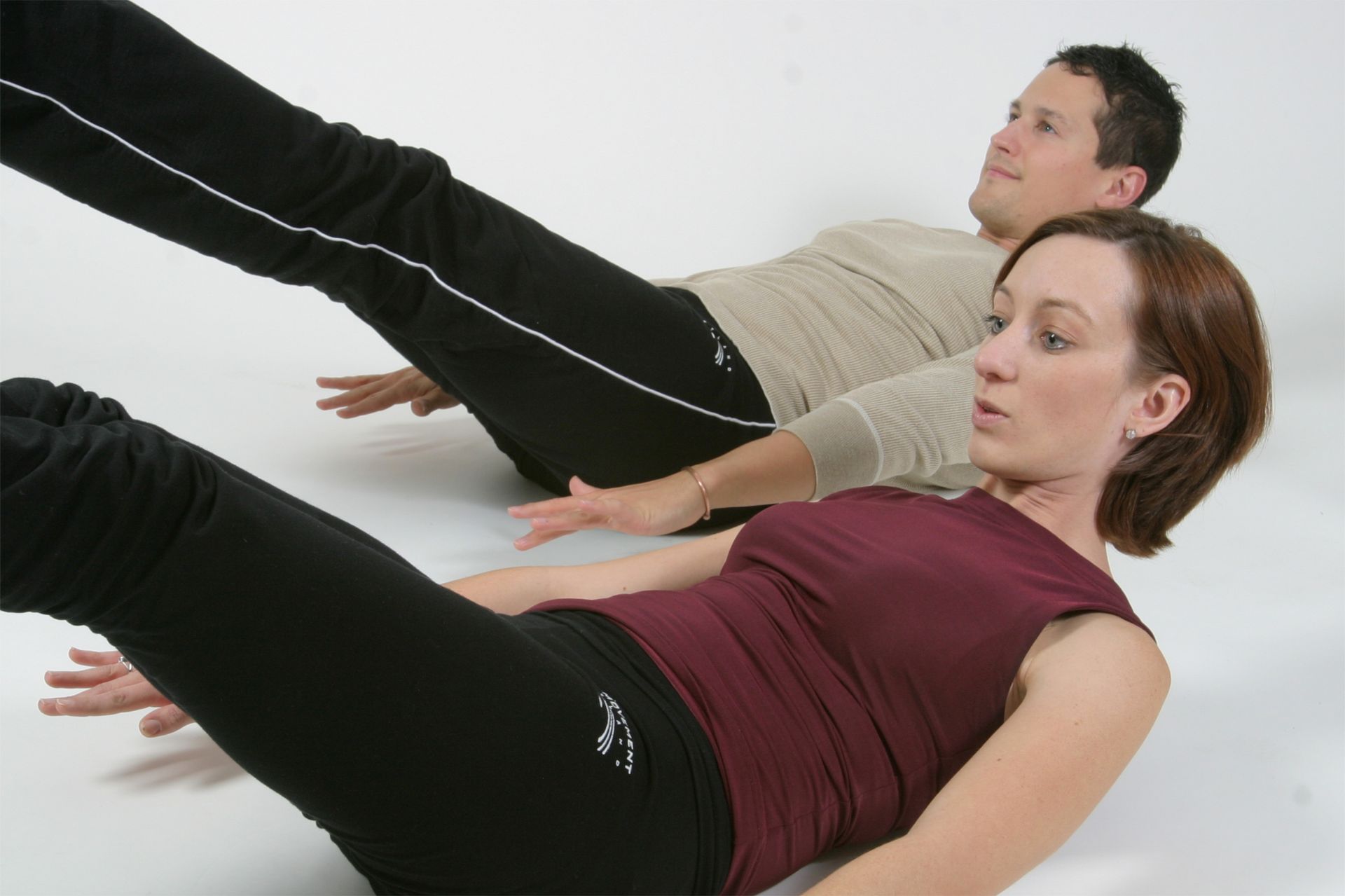
The half curl is deceptively simple.

You’re lying on your back.
Knees bent.
Feet grounded.
Head and shoulders lift just enough to bring the ribs toward the pelvis.

It’s not a big movement—and that’s precisely why it’s useful.

In a well-executed half curl:

  • The movement is small
  • The spine flexes gently
  • The abdominal wall responds reflexively
  • The TA contributes without being overpowered by momentum

When done with breath awareness, the half curl becomes a conversation between the nervous system, the abdominal wall, and the spine.

The Role of the Exhale

Here’s where engage becomes clearer.

The transverse abdominis has a strong relationship with exhalation. When you exhale fully, the rib cage naturally moves inward and downward. This creates an environment where the TA can respond efficiently.

Not because you told it to—but because the conditions are right.

When I cue engagement during a half curl, I’m often asking for:

  • A long, complete exhale
  • A sense of narrowing around the waist
  • A feeling of support rather than flattening

Many people are shocked by how different the exercise feels when they prioritize the exhale.

Suddenly:

  • The neck works less
  • The lower back feels supported
  • The movement feels lighter but stronger

That’s not coincidence. That’s physiology.

What “Engage” Is Not Asking For

Let’s be clear about what we’re not trying to do.

Engage does not mean:

  • Pull your belly button aggressively to your spine
  • Flatten your back into the mat
  • Lock your ribs down
  • Hold your breath
  • Create rigidity

These strategies often recruit surface muscles and bypass the deeper system entirely. For people with back pain histories, they can increase fear and tension rather than confidence.

Engagement should feel supportive, not restrictive.

For Clients: If You’ve Ever Felt Confused or Afraid

If you’ve ever been told to “engage your core” and felt unsure whether you were doing it right—you’re not alone.

And if you’ve experienced back pain, that confusion can turn into fear quickly.

Here’s something important to know:
Your body already knows how to engage your transverse abdominis.

What it often needs is:

  • Time
  • Breath
  • Permission
  • A manageable range of motion

You don’t need to force engagement. You need to create the conditions where it can happen naturally.

The half curl, when taught thoughtfully, does exactly that.

For Teachers: Why This Cue Matters

As teachers, we have a responsibility to remember that cues are not instructions—they’re translations.

When we say engage without context, we’re assuming:

  • The client knows which muscle
  • They know how it should feel
  • They feel safe enough to try

That’s a lot to assume.

Adding specificity—such as tying engagement to the exhale—gives clients something actionable without overwhelming them with anatomy.

It also shifts the tone from command to collaboration.

When Engagement Isn’t Appropriate (Yet)

This is where nuance matters.

There are moments—especially for clients early in their return to movement—where asking for engagement can feel like pressure.

In those cases, it may be more effective to cue:

  • Breath
  • Weight of the body
  • Ease of movement
  • Range rather than effort

Engagement is not a prerequisite for movement.
Sometimes, movement is what allows engagement to reappear.

The Bigger Picture: Why This Series Exists

Behind the Cue exists because words matter.

A single word can:

  • Create confidence
  • Create confusion
  • Invite curiosity
  • Or shut someone down entirely

When we unpack cues like engage, we give people agency. We help them understand what their body is being asked to do—and why.

That understanding is especially important for people navigating pain histories, fear, or a return to exercise after time away.

Bringing It Back to Trust

At its core, engagement is not about effort.

It’s about trust.

Trust that your breath can support you.
Trust that small movements matter.
Trust that your body is capable of responding when it’s ready.

In the half curl, engagement isn’t something you impose.
It’s something you allow to happen.

And that distinction—between forcing and listening—is where real strength begins.


By Leslie Guerin February 2, 2026
Stability Is Not Stillness — It’s Organized Effort “Hold still.” If you’ve ever taken one of my classes, you’ve heard me say it. And if you’ve ever felt it, you know it isn’t about freezing. Most of the time when a teacher says “hold still,” it’s because something else is happening. Maybe bouncing, gripping, bracing, or compensating of some kind. Something is moving that shouldn’t be. But “hold still” does not mean “be still.” Those two cues might sound similar, but in Pilates they mean very different things. Be Still vs Hold Still Be still is a pause. It’s a full stop. It’s often used so you can feel one specific thing: “Be still… feel your ribs.” “Be still… notice your pelvis.” “Be still… now breathe.” It’s about attention. Hold still is something else entirely. Hold still means: Stay organized Stay lifted Stay connected Stay breathing You are not passive. You are not collapsed. You are actively maintaining shape while something else moves. It is one of the most advanced skills in Pilates. Why Teachers Say “Hold Still” We say it when we see: The pelvis shifting The ribs popping The shoulders helping Momentum sneaking in The body is trying to get the job done by recruiting the wrong helpers. So “hold still” is really a request for clean movement : Let only the part that is supposed to move… move. Everything else must work just as hard, just not by changing position. Side-Lying Leg Lifts: The Perfect Example Let’s take one of the most deceptively simple exercises in mat Pilates: Side-lying leg lifts. On the surface, it looks like this: You lie on your side You lift the top leg You lower it But what is really happening is far more complex. This exercise is designed to balance one side of the body on the other . The top leg moves. The rest of the body holds still. Not rigid. Not collapsed. Not gripping. Holding. What “Hold Still” Actually Means Here While the top leg lifts and lowers: The bottom side of the body is working. The bottom rib cage is lifted off the mat, creating space The waist is long, not sagging The spine is stacked, not rolled back The top hand in front of the body is not there to lean on, it is there to quiet the rocking forward and backward. The pelvis stays level. No tipping. No hiking. No rolling. Everything that is not the leg is holding still... but nothing is relaxed. This Is Why Breathing Matters If you stop breathing, you are not holding still. You are bracing. Holding still means you can: Maintain the shape Keep the effort And still let the breath move That’s where the deep stabilizers do their job: The abdominals The muscles along the spine The lateral hip The inner thighs The breath becomes the test: Can you stay organized even while something else is moving? That’s real control. Why This Cue Changes Everything “Hold still” teaches the nervous system something incredibly important: You don’t create strength by moving more. You create strength by controlling what doesn’t move . That’s how: Hips become more stable Backs become more supported Movement becomes quieter and more powerful It’s also how injuries are prevented, especially in people who are flexible, mobile, or used to muscling through. So Next Time You Hear It… When I say “hold still,” I’m not asking you to freeze. I’m asking you to: Stay lifted Stay connected Stay breathing Stay honest Let the right thing move. Let everything else do its job. That’s Pilates.

By Leslie Guerin January 30, 2026
Small, regular efforts add up
By Leslie Guerin January 29, 2026
The Manual I Wish I Had When I Started Teaching Pilates
By Leslie Guerin January 28, 2026
A Thoughtful Approach to Barre, Mat Pilates, and Reformer Progression in the Modern Studio

By Leslie Guerin January 27, 2026
In Every Movement
By Leslie Guerin January 26, 2026
(And What to Say Instead)
By Leslie Guerin January 23, 2026
Why I Built a One-to-One, Self-Paced Teacher Training Model
By Leslie Guerin January 22, 2026
On music, Pilates, and the strange urge to prove you were there first
By Leslie Guerin January 21, 2026
More Than Just Neck Comfort
By Leslie Guerin January 20, 2026
Why Moving Through the Work Can Be Just as Meditative as Holding Still
Show More