How to make exercise a habit - even if you hate it.

Leslie Guerin • May 26, 2025

Discover the secret to staying consistent and why becoming certified—just for yourself—might be your best motivation yet.

We’ve all been there:
You know you should exercise.
You want to want to exercise.
But if you’re honest, you… well…
kinda hate it.

Or maybe it’s not hate exactly—maybe it’s dread, or boredom, or that nagging voice saying, “I’m just not athletic.”

Here’s the thing: you don’t have to love exercise to make it a habit.
You just have to keep showing up—
especially when you don’t feel like it.

And yes, that’s possible—even for you.

Why Exercise Feels So Hard

Let’s be real: there are a lot of reasons exercise feels hard to start, let alone stick with.
👉 We’re busy.
👉 It’s uncomfortable.
👉 It’s confusing (what should I even do?).
👉 We’d rather do… well, just about anything else.

And there’s also a cultural myth that exercise has to be perfect to count:

  • The longest workout
  • The most intense class
  • The perfect outfit or setting

But here’s the truth: exercise doesn’t have to be perfect—it just has to be done.

The secret? Making it a habit.
And here’s how you can do it—no love for exercise required.

1️⃣ Start Small—Smaller Than You Think

When you’re trying to start a new habit, your brain will resist anything that feels too big.
That’s why “I’m going to work out for an hour every day!” usually crashes and burns.

Instead, try this:

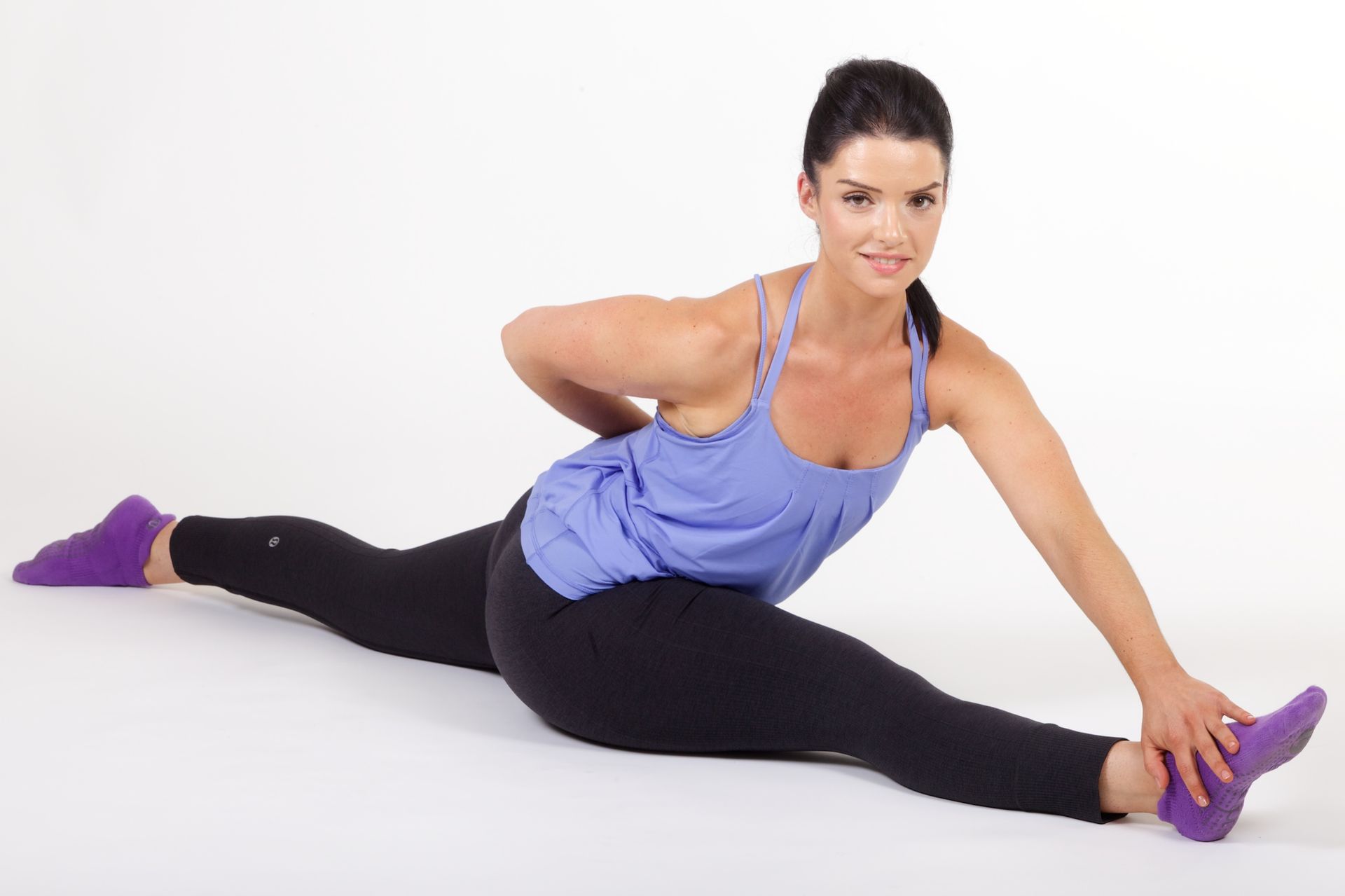
  • Do five minutes of gentle stretching.
  • Take a brisk walk around the block.
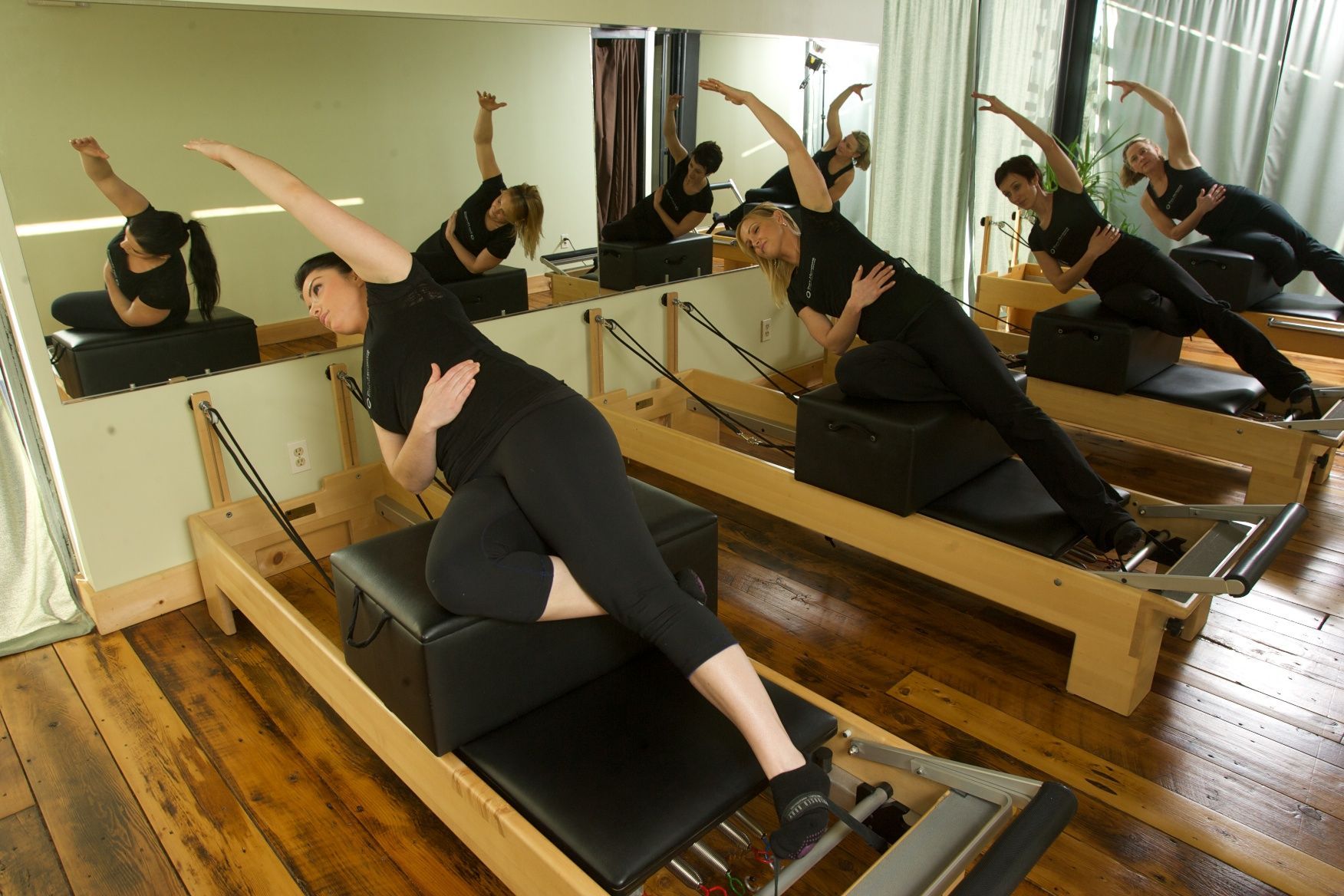
  • Do 10 reps of a single Barre or Pilates move.

It’s not about getting a perfect workout—it’s about getting moving at all.

2️⃣ Find What You Don’t Hate

Maybe you’ve always been told to run, but you hate running.
Maybe you feel silly in the weight room, or lost in a cardio class.

But what if you just haven’t found your movement yet?

Barre and Pilates, for example, combine:
Full-body movement
Graceful, flowing transitions
Gentle but deep strength
Mind-body focus

They’re low-impact (great for injuries or chronic pain), and they’re designed to be adaptable—no matter your level or mood.

So before you write off exercise entirely, try a few different styles—you might be surprised by what sticks!

3️⃣ Link It to Something You Already Do

One of the most powerful tools in habit-building is habit stacking—attaching your new habit to something you already do.

  • Morning coffee? Spend 5 minutes doing Pilates mat work.
  • Brushing your teeth? Do 10 squats or a quick standing barre series.
  • Scrolling Instagram? Put your phone down and do a 2-minute plank challenge.

The easier you make it to remember and do the movement, the less resistance you’ll feel.

4️⃣ Make It Social (or at Least Accountable)

Accountability is huge when you’re trying to make exercise a habit.
That’s why people love group classes—
even if they’re online.

  • Tell a friend what you’re trying to do.
  • Join a challenge (like doing 50 classes in 99 days—more on that in a bit!).
  • Sign up for a certification program, even if you never plan to teach—more on that in a minute, too!

When someone else knows your goal, you’re more likely to show up—and showing up is what builds the habit.

5️⃣ Reframe the Goal

Sometimes, exercise feels like punishment—like you’re only doing it to lose weight or “fix” yourself.

But what if you shifted the focus?
✅ Move to
feel good—not to look a certain way.
✅ Move to
learn—to get curious about how your body works.
✅ Move to
take care of yourself—because you deserve to feel strong, capable, and alive.

What If You… Still Hate It?

Here’s the truth:
You don’t have to love every minute of exercise.
But you might learn to love what it
does for you:
💜 The energy.
💜 The focus.
💜 The sense of accomplishment.

And the more you move—even in small ways—the more you’ll see those benefits add up.

Why Certification Can Help—Even If You Never Want to Teach

You might be wondering:
“Why would I get certified in Barre or Mat Pilates if I don’t want to be a teacher?”

Here’s why:
Accountability—having a structured program keeps you consistent.
Deeper knowledge—you’ll understand the why behind every move.
Pride—there’s something powerful about finishing a program and knowing: I did that.
Personal growth—you’ll see your own progress in ways you never would in a drop-in class.

Even if you never teach a day in your life, these programs are about you—your body, your mind, and your ability to commit to something meaningful.

Memorial Day Sale: Your Summer of Certification Starts Here

Ready for a nudge?
This
Memorial Day, I’m offering a special sale on my Mat Pilates and Barre Teacher Trainings:

🌟 Regular Price: $499
🌟
Sale Price: $200 (That’s $299 off!)
🌟
Sale Ends: Sunday, June 1st at midnight

That’s right—you can spend your summer becoming certified in Barre or Mat Pilates for just $200.

And you’ll have unlimited access to the materials, so you can learn at your own pace—even if your summer is full of travel or beach days.

99 Days of Summer, 50 Classes—Can You Do It?

Summer is about more than sun and BBQs—it’s a perfect time to build a habit that will last long after Labor Day.

That’s why I’m challenging you:
💪
50 classes in 99 days—that’s roughly 3 workouts a week.

It’s totally doable—especially with my on-demand library and certification programs to guide you.

And just imagine how you’ll feel at the end of summer:
✅ Stronger.
✅ More focused.
✅ Proud of what you built.

How BarSculpt Can Help

I created BarSculpt to help you make movement a habit—even if you’re brand new or coming back after a long break.

With my on-demand library, live virtual classes, and self-paced certifications, you’ll get:
💜
Variety—Barre, Pilates, and more
💜
Community—cheering you on from wherever you are
💜
Expert guidance—because I know what it’s like to start from zero

Your Summer of Movement Starts Now

Here’s what I want you to remember:
You don’t have to love exercise to make it part of your life.
You just have to start.
And then, keep going—even if it’s just a little bit at a time.

So:
👉
Try a 5-minute workout today—just to see how it feels.
👉
Consider a certification program—not to teach, but to learn.
👉
Join the summer challenge—because you’ll feel amazing at the finish line.

💜 Ready to Move? 💜

Your summer of movement, learning, and transformation starts today.
Let’s make it happen—together.


By Leslie Guerin February 4, 2026
Why the Future of Movement Has to Change
By Leslie Guerin February 2, 2026
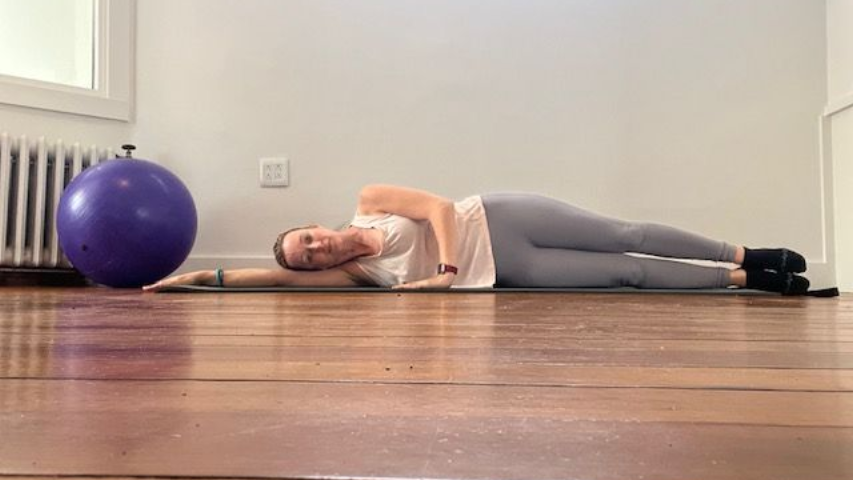
Stability Is Not Stillness — It’s Organized Effort “Hold still.” If you’ve ever taken one of my classes, you’ve heard me say it. And if you’ve ever felt it, you know it isn’t about freezing. Most of the time when a teacher says “hold still,” it’s because something else is happening. Maybe bouncing, gripping, bracing, or compensating of some kind. Something is moving that shouldn’t be. But “hold still” does not mean “be still.” Those two cues might sound similar, but in Pilates they mean very different things. Be Still vs Hold Still Be still is a pause. It’s a full stop. It’s often used so you can feel one specific thing: “Be still… feel your ribs.” “Be still… notice your pelvis.” “Be still… now breathe.” It’s about attention. Hold still is something else entirely. Hold still means: Stay organized Stay lifted Stay connected Stay breathing You are not passive. You are not collapsed. You are actively maintaining shape while something else moves. It is one of the most advanced skills in Pilates. Why Teachers Say “Hold Still” We say it when we see: The pelvis shifting The ribs popping The shoulders helping Momentum sneaking in The body is trying to get the job done by recruiting the wrong helpers. So “hold still” is really a request for clean movement : Let only the part that is supposed to move… move. Everything else must work just as hard, just not by changing position. Side-Lying Leg Lifts: The Perfect Example Let’s take one of the most deceptively simple exercises in mat Pilates: Side-lying leg lifts. On the surface, it looks like this: You lie on your side You lift the top leg You lower it But what is really happening is far more complex. This exercise is designed to balance one side of the body on the other . The top leg moves. The rest of the body holds still. Not rigid. Not collapsed. Not gripping. Holding. What “Hold Still” Actually Means Here While the top leg lifts and lowers: The bottom side of the body is working. The bottom rib cage is lifted off the mat, creating space The waist is long, not sagging The spine is stacked, not rolled back The top hand in front of the body is not there to lean on, it is there to quiet the rocking forward and backward. The pelvis stays level. No tipping. No hiking. No rolling. Everything that is not the leg is holding still... but nothing is relaxed. This Is Why Breathing Matters If you stop breathing, you are not holding still. You are bracing. Holding still means you can: Maintain the shape Keep the effort And still let the breath move That’s where the deep stabilizers do their job: The abdominals The muscles along the spine The lateral hip The inner thighs The breath becomes the test: Can you stay organized even while something else is moving? That’s real control. Why This Cue Changes Everything “Hold still” teaches the nervous system something incredibly important: You don’t create strength by moving more. You create strength by controlling what doesn’t move . That’s how: Hips become more stable Backs become more supported Movement becomes quieter and more powerful It’s also how injuries are prevented, especially in people who are flexible, mobile, or used to muscling through. So Next Time You Hear It… When I say “hold still,” I’m not asking you to freeze. I’m asking you to: Stay lifted Stay connected Stay breathing Stay honest Let the right thing move. Let everything else do its job. That’s Pilates.
By Leslie Guerin January 30, 2026
Small, regular efforts add up
By Leslie Guerin January 29, 2026
The Manual I Wish I Had When I Started Teaching Pilates
By Leslie Guerin January 28, 2026
A Thoughtful Approach to Barre, Mat Pilates, and Reformer Progression in the Modern Studio
By Leslie Guerin January 27, 2026
In Every Movement
By Leslie Guerin January 26, 2026
(And What to Say Instead)
By Leslie Guerin January 23, 2026
Why I Built a One-to-One, Self-Paced Teacher Training Model
By Leslie Guerin January 22, 2026
On music, Pilates, and the strange urge to prove you were there first
By Leslie Guerin January 21, 2026
More Than Just Neck Comfort
Show More