There are some cues in fitness that make people laugh, cringe, or roll their eyes.
“Stick your butt out” is one of them.
It sounds casual. It sounds unsophisticated. It sounds like something a personal trainer might yell across a gym floor.
But in a barre or Pilates-inspired class, it may be one of the most anatomically accurate and useful cues you can give — especially in an exercise like Foldover.
Let’s talk about why.
⸻
The exercise: Foldover
In barre, Foldover looks simple.
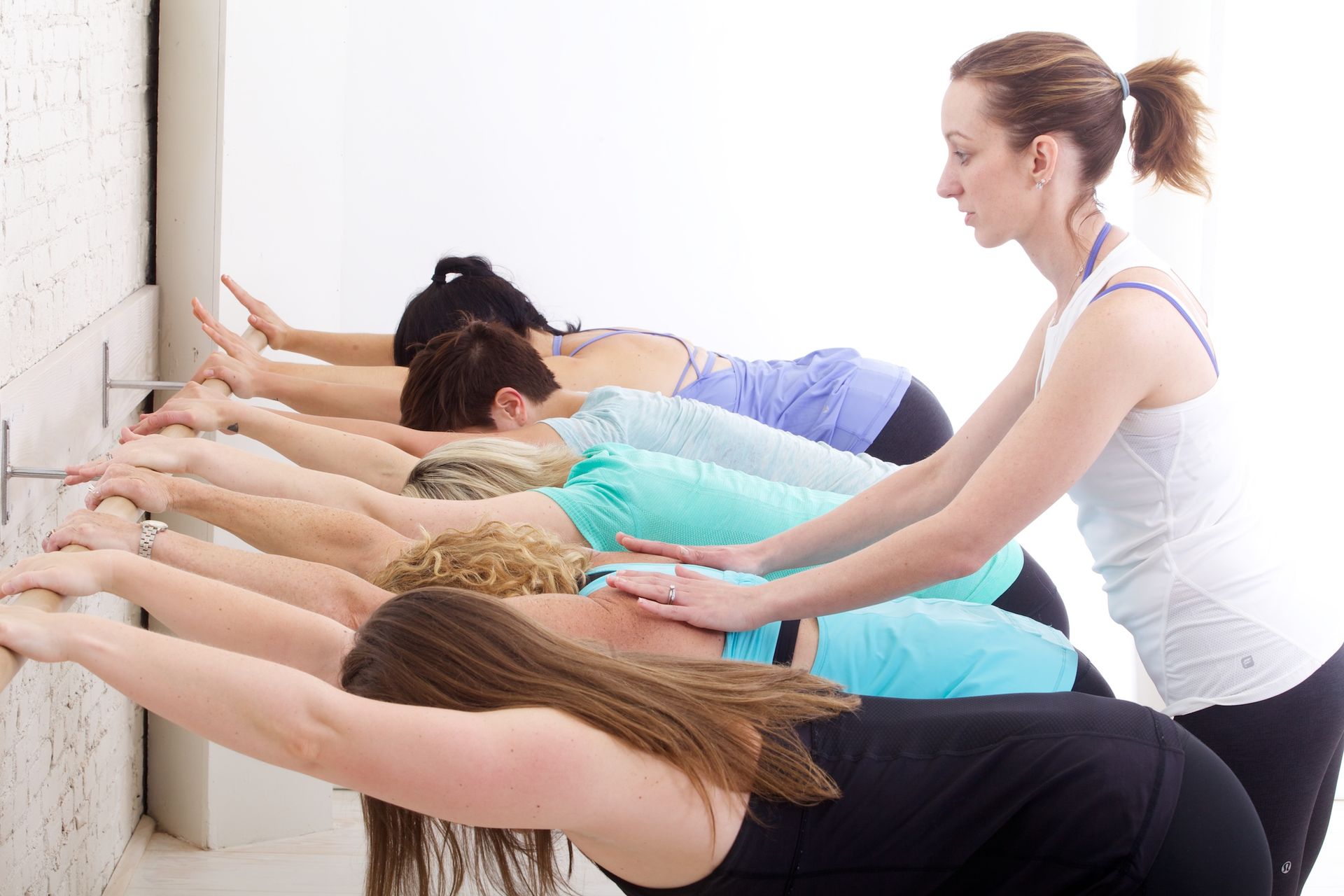
You’re standing at the barre.
Both hands are holding it.
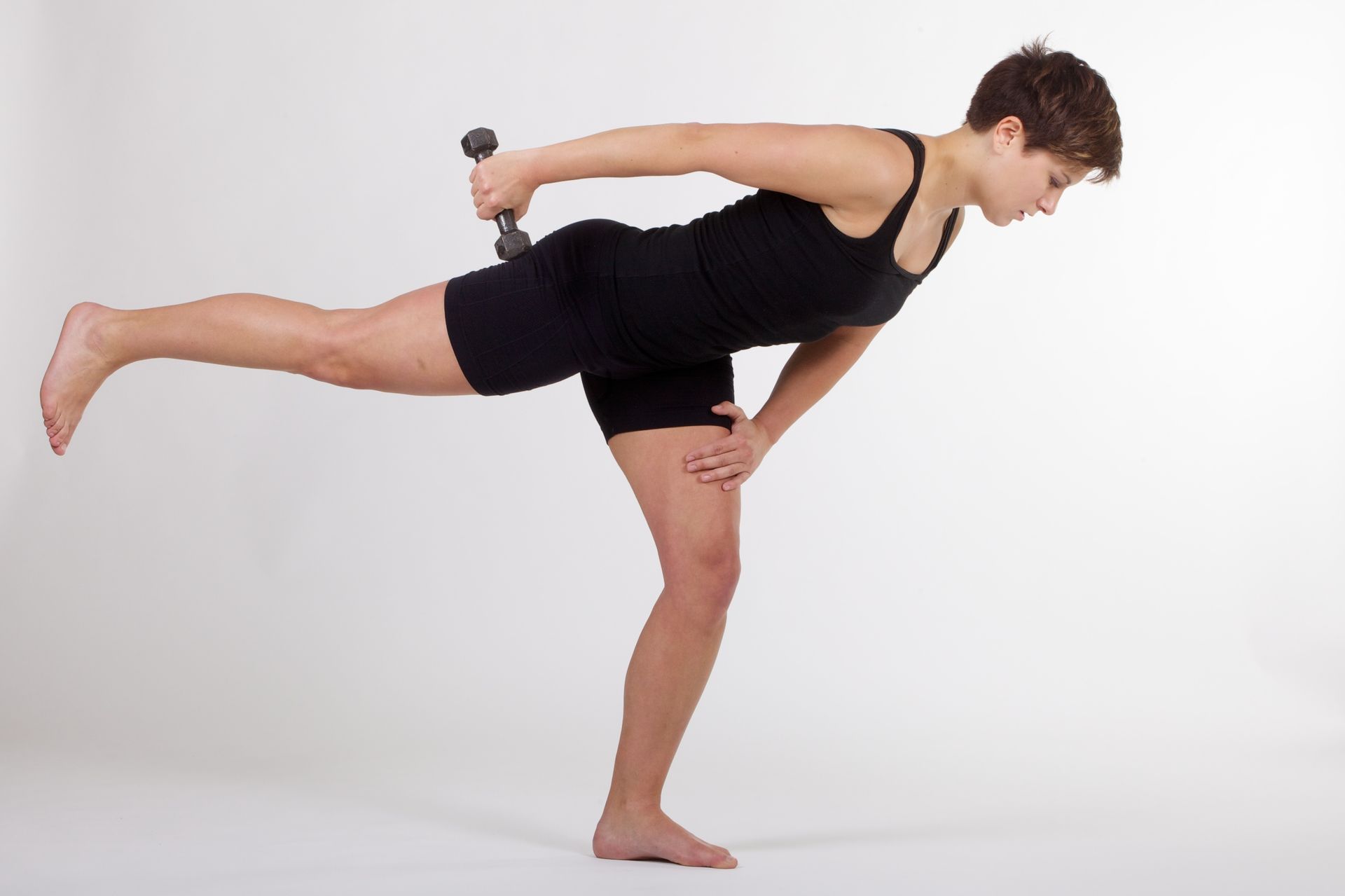
Your body is hinged forward at the hips, roughly a 90-degree angle.
Your spine is long.
Your hips are pulled back.
Your weight is slightly forward over the balls of the feet.
From here, we usually add:
• Pulses
• Leg lifts
• Hamstring curls
• Or glute-focused movements
But this position only works when the hinge is correct.
And that hinge depends on one thing:
Your butt being behind you.
⸻
What people naturally do instead
When clients don’t understand how to hinge at the hips, they do one of two things:
1. They round their lower back
2. Or they bend forward from their spine instead of their hips
Both shift the work into the lumbar spine instead of the glutes and hamstrings.
So instead of training strength and stability, they’re compressing joints and loading tissue that was never meant to do this job.
And then they say:
“Barre hurts my back.”
No — barre didn’t hurt their back.
The hinge was wrong.
⸻
Why “stick your butt out” works
Here’s the problem with most technical cues:
“Anteriorly tilt your pelvis.”
“Create a hip hinge.”
“Lengthen the lumbar spine.”
They’re correct…
But in a group class, they’re useless.
What people can do is picture something concrete.
“Stick your butt out” instantly tells the body:
• Send the hips backward
• Keep the chest long
• Shift weight out of the spine
• Load the glutes
It creates:
• A neutral pelvis
• A long lower back
• A true hinge
• And suddenly…
the glutes turn on
That one crude-sounding phrase fixes everything.
⸻
But it can go too far
This is where good teaching matters.
If someone pushes their butt too far out, they’ll:
• Over-arch the lower back
• Dump into the lumbar spine
• Lose abdominal support
So the cue isn’t:
“Stick your butt out forever.”
It’s:
“Stick your butt out enough to hinge — then control it with your core.”
That’s the balance.
That’s the craft of teaching.
⸻
What this really teaches your clients
Foldover isn’t just a barre exercise.
It’s:
• How to pick something up
• How to hinge in deadlifts
• How to protect the spine
• How to move in real life
When you teach someone to hinge properly, you’re giving them:
• Strong glutes
• A resilient back
• And safer movement patterns for years
And sometimes the fastest way to do that is…
“Stick your butt out.”
⸻
Behind the cue
Great cues aren’t about sounding smart.
They’re about getting bodies to do the right thing — quickly, safely, and consistently — especially in a group setting.
If a silly-sounding phrase creates:
• Better alignment
• Less back strain
• And stronger glutes
Then it’s not crude.
It’s brilliant.