
Pilates Precision vs. Gentle
Pilates Isn’t Gentle. It’s Precise!
There is a persistent misconception that Pilates is meant to be gentle. However Pilates is meant to be precise not gentle. This being said, Pilates can absolutely be appropriate for rehabilitation, longevity, and sustainable strength, that does not mean it is simple. The Pilates method is not defined by how soft it looks. It is defined by how precise it is.
Precision is the difference between movement that merely resembles Pilates and movement that actually is Pilates. Most people have never experienced that difference.
Precision Requires Attention
Precision is not aesthetic. It is neurological. Pilates requires attention to joint placement, breath sequencing, muscular initiation, and the subtle organization of the body before the movement even begins. Precision asks a teacher to see more than the shape of an exercise. It asks them to see the body inside the exercise.
This is where many classes, and teacher trainings, quietly drift off course.
When precision is present, the experience changes immediately:
- The pace becomes intentional
- The transitions become meaningful
- The cues become specific rather than decorative
- The effort becomes internal rather than performative
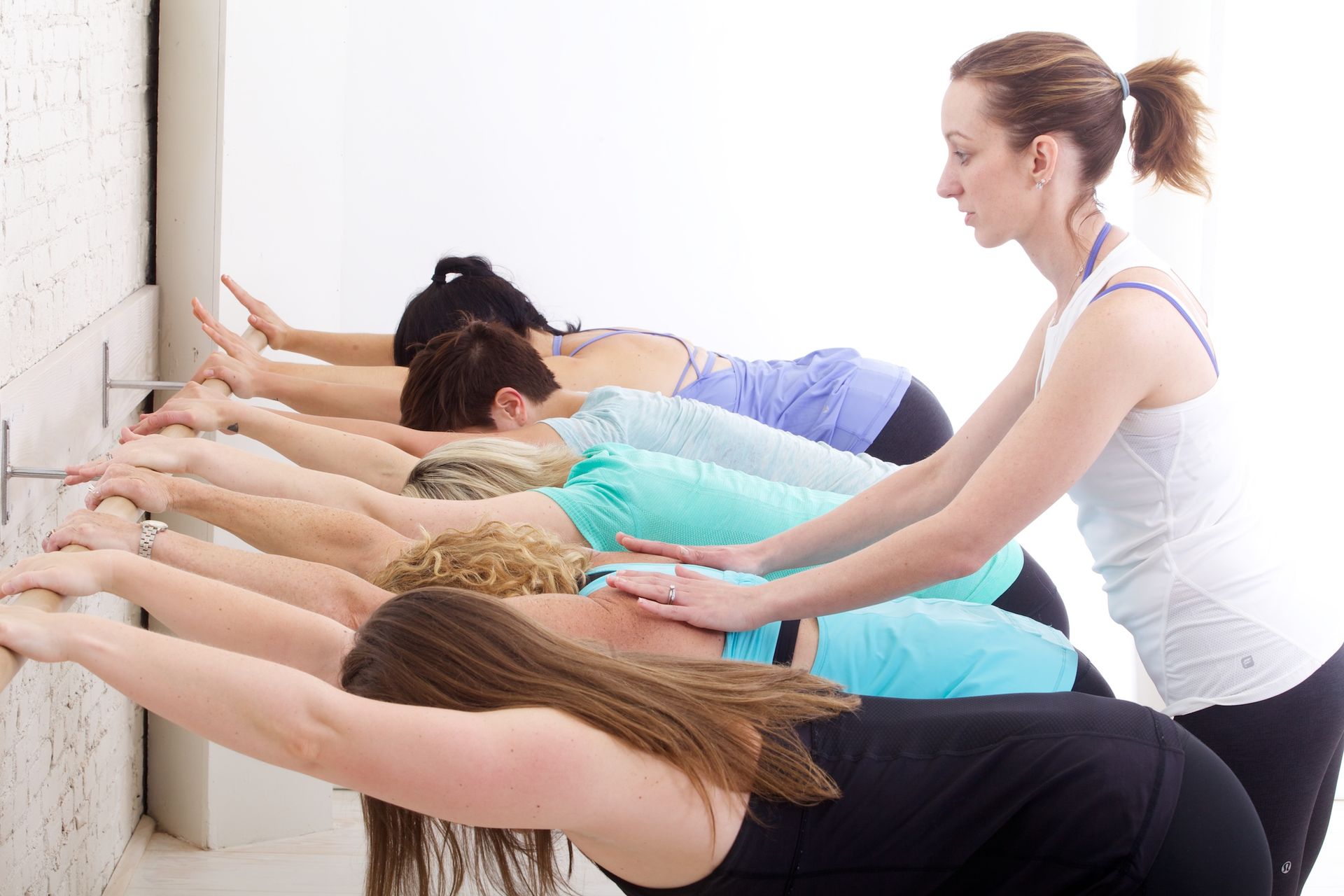
You are no longer just “doing exercises.” You are organizing your body with intention. That level of organization cannot happen without attention. Not passive but active attention. The kind that notices rib placement, cervical tension, pelvic shifts, breath holding, and compensatory gripping before it becomes a pattern. Precision demands that the teacher is watching bodies, not just leading choreography. This is where BarSculpt fills the gap.
Many Classes Look Like Pilates But Are teaching moves, Bodies
It is entirely possible to teach a class that looks like Pilates without actually teaching Pilates.
The exercises may be correct. The order may even be familiar. The language and cuing may sound technical. However the movement is not being adapted to the body in front of you, it is choreography, not instruction. It is similar to the AI version of the method.
Bodies are not templates. One client may need more spinal articulation while another may need less flexion and more extension. There are many different versions of the differences needed in the same room, though the truth remains the same. If every client is doing the same version of the same exercise thinking of the movements in the exact same way, the teaching is not precise. It is generalized. Generalized movement may be accessible, but it is not what makes Pilates effective.
Teaching to bodies means:
- Observing posture before movement begins
- Modifying load, tempo, and range intentionally
- Recognizing when a client is substituting effort for control
- Adjusting cueing based on what you see, not what you planned
This level of teaching requires skill, not just certification. It requires an eye for shapes. An ear for reading between the lines of client reviews, and an overall respect for the nervous system.
Because Pilates is not just muscular work. It is neuromuscular education.
Pilates Feels Smaller
When precision is present, classes often become smaller. Not less challenging. Instead, there is focus. The movements are smaller, but the demand is greater. The transitions are slower, but the work is deeper. Clients may not be drenched in sweat, yet they feel profoundly worked in a way that is difficult to replicate through speed or volume.
This is often surprising for people who associate difficulty with exhaustion. But neurological demand does not always look dramatic. Holding a neutral pelvis while articulating the spine with controlled breath is neurologically demanding. Maintaining scapular stability during arm work without recruiting the neck is neurologically demanding. Initiating movement from the deep abdominals rather than the hip flexors is neurologically demanding. These appear to be subtle tasks, though they require precision. Precision requires a developed mindbody for doing AND teaching.
More Repetitions Do Not Replace Better Instruction
One of the most common responses to a lack of precision is to increase intensity. More repetitions with faster pacing, bigger movements and longer sequences and LESS resistance. But more is not the same as better. Bigger allows for more room for instability and compensation. If a client is performing an exercise with poor alignment or incorrect muscular initiation, repeating it more times simply reinforces the compensation pattern. The nervous system learns the easiest available strategy, not the most effective one.
Precision interrupts that cycle. It slows the movement down long enough for the correct pattern to be established. It provides feedback that allows the client to adjust in real time. It teaches the body how to move, not just how to complete an exercise. This is why a well-taught basic exercise can feel significantly more demanding than a poorly taught advanced one. Because the body is finally being asked to organize, not just perform.
Precision Is Not Perfection
It is important to clarify: precision is not about rigidity or aesthetic perfection. It is about clarity. Clear joint placement, muscular intention, breath coordination and clear purpose behind each exercise.
Precision allows the exercise to do what it is designed to do. Without it, movements become approximations. This may feel productive, but rarely will deliver the depth of benefit Pilates is known for. We show up to Pilates seeking improved posture, spinal support, balanced strength, and efficient movement patterns.
Precision also allows for intelligent modification. A precise teacher knows when to reduce range, when to support the head and neck, when to adjust tempo, and when to change the exercise entirely. This is especially critical for clients with injuries, hyper mobility, osteoporosis, or chronic tension patterns. Gentleness, when needed, should be intentional, not the result of vague instruction.
The Neurological Demand Most People Miss
The Pilates method is demanding in a way that is often misunderstood. It is not always about muscular fatigue instead it fights for neurological coordination.
Clients are asked to:
- Stabilize while moving
- Lengthen while strengthening
- Breathe without losing alignment
- Maintain control through transitions
This creates a level of internal focus that can feel more challenging than high-intensity formats that rely on momentum.
Many clients initially interpret this as “harder,” even though the movements are smaller and more controlled. What they are experiencing is the nervous system being asked to engage more precisely. That is the work.
Why the Industry Often Skips Precision
Precision takes time to learn and time to teach.
It requires:
- Strong foundational education
- Ongoing observation skills
- Confidence in slower pacing
- A willingness to correct rather than simply encourage
In fast-paced group fitness environments, there is often pressure to keep energy high, transitions quick, and sequences flowing. While this can be engaging, it can also lead to surface-level teaching where exercises are demonstrated but not deeply coached. Additionally, many instructors were trained to memorize exercises rather than understand movement mechanics. Without a strong foundation in biomechanics, cueing can become generalized and corrective feedback becomes limited. This is not a lack of effort. It is a gap in training. Teaching an order of movements instead of the goals, stops you from seeing the forest from the trees. This tiny training change it is one that directly impacts the client experience.
Teaching Better Changes Everything
When Pilates is taught with precision:
- Clients feel supported rather than overwhelmed
- Injuries are better respected and accommodated
- Strength develops in a balanced way
- Postural awareness improves naturally
- Movement becomes more efficient and sustainable
Perhaps most importantly, clients begin to understand their own bodies. They learn how to initiate movement correctly, how to recognize compensation, and how to self-adjust. This creates education through movement and this is exactly why I teach!! I find that learning within the work is the core of movement instruction.
A Clear Direction for Teachers
If Pilates is to maintain its integrity and effectiveness, the direction must be clear: better teaching, not louder workouts. More observation, to enhance the choreography.
Teachers do not need to overwhelm clients with complexity. They need to refine their eye, their cueing, and their understanding of how bodies actually move.
When teaching improves, everything improves. Results, retention, confidence and longevity for both client and teacher!
Precision is not an accessory to Pilates. It is a principle of the method.
It deserves to be taught and adhered to. Pilates doesn’t need to be harder. It needs to be taught more precisely.
If you are ready to deepen your understanding of precision, biomechanics, and teaching to real bodies, my Pilates Mat Teacher Training begins March 3rd. This program is designed for instructors and dedicated practitioners who want a clear, intelligent, and direct approach to teaching Pilates with purpose, structure, and lasting impact.