There is a moment that happens in almost every movement practice, whether it’s Pilates, barre, yoga, or strength training. A twinge appears. A pull. A familiar ache. And suddenly the mind jumps to a conclusion:
Something is wrong.
For many people, pain has become synonymous with damage. We have been taught that if something hurts, we should stop, avoid, and tiptoe. And while that instinct comes from a place of wanting to stay safe, it does not always lead us to truth.
Because pain is not a simple on/off switch. It’s a form of communication.
Sometimes it is telling us that tissue is irritated. Sometimes it is telling us we are tired. Sometimes it is telling us we moved awkwardly. And sometimes it is telling us that our body does not feel confident about what it’s being asked to do.
That last one is where things get interesting.
When Pain Is a Form of Confusion
Your nervous system is designed to protect you. It is constantly scanning for threat, not just in the outside world, but inside your body. When it encounters something unfamiliar, or poorly supported, it often sends out a warning signal. We feel that as discomfort, tightness, or even pain.
I say this all the time
"That does not mean you are broken."
It often means your body is saying, “I’m not sure about this.”
Think of it like trying to carry a heavy box. If you bend awkwardly, twist suddenly, or lose your balance, your body reacts. Not because the box is inherently dangerous, but because the way you are moving with it is.
When your form is off, when your joints are not supported, when your breath is held, or when the wrong muscles are doing the job, your body sends feedback. That feedback is meant to help you reorganize, not shut down.
Why Stopping Is not Always the best Answer
One of the hardest things for people to learn is that “stop” is not always the most intelligent response to discomfort. Sometimes the most helpful thing is to pause, reset, adjust, and continue.
If every time you felt emotional discomfort you simply shut down, you would never learn anything about yourself (I will save stories about that for my personal journal). You would not discover why certain situations make you anxious or why something that looks fine on the surface feels heavy underneath. You would just avoid.
Physical pain can work the same way (i'll also save how sometimes physical pain IS emotional pain for another blog). It invites curiosity.
What changed in your body right before it showed up? Did you lose your breath, rush, brace or simply disassociate?
That’s the conversation we want to have.
This Is Not About Pushing Through
Let me be very clear about something, because this gets misunderstood. Listening to pain does not mean ignoring it. It does not mean forcing yourself through it. It does not mean pretending you’re fine. It means staying present with it long enough to understand it.
There is a huge difference between “I feel something, let me adjust” and “I feel something, I’ll just grit my teeth.”
The first builds awareness. The second builds injury.
Why Trainers Matter in This Conversation
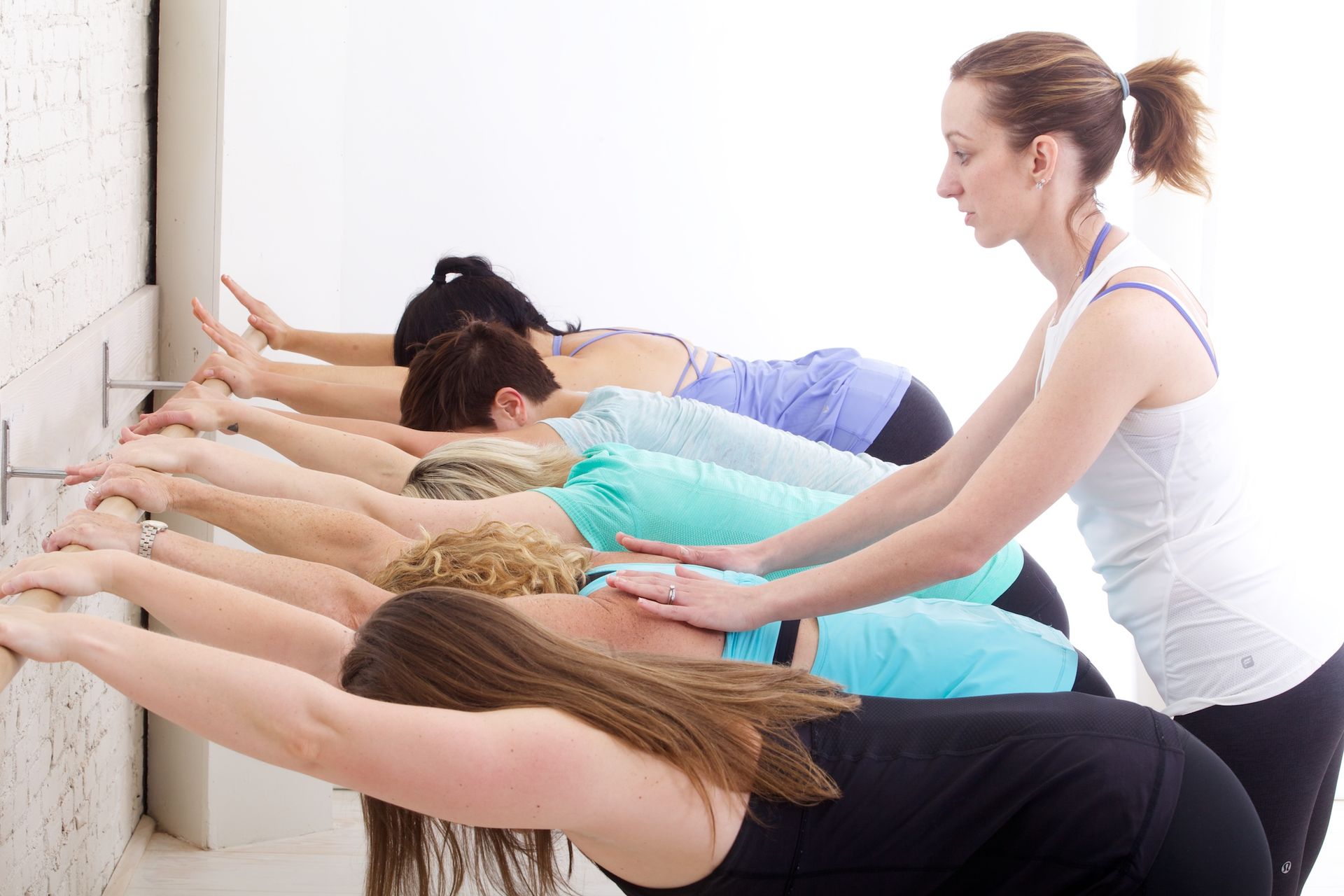
This is where having a trained eye makes all the difference. When you are in your own body, it’s hard to see what is actually happening. You feel the symptom, but not the cause. A good teacher can watch your movement and see where something is collapsing, where something is gripping, or where something is not doing its job. That is not about judgment. It’s about clarity.
The goal of a trainer is not to protect you from sensation. It IS to help you understand what that sensation is connected to.
The Challenge of Group Classes
Group classes are wonderful. They create energy, consistency, and community. Studies now prove they even fight anxiety! They helpfully encourage you to move more than you would at home. These are all good things.
But they are not designed for deep individual problem solving.
When something new shows up in your body, that is where a private session or a focused conversation becomes invaluable. It gives you the space to explore what you are feeling without rushing or performing. Private sessions give space for playing with solutions until you find the right one!
That is how you get answers instead of just coping.
The Goal Is Resilience, Not Fragility
The ultimate goal of any good movement practice is not to keep you wrapped in bubble wrap.
It is to help you become resilient.
Resilient bodies know how to adapt.
They know how to adjust.
They know how to recover.
And that only happens when we stop treating every sensation as a threat and start treating it as information.
Learning to Trust Yourself Again
So much of what people want when they come to Pilates or barre is not just strength — it’s trust. They want to feel at home in their bodies again. They want to stop being afraid of every little ache.
That trust doesn’t come from avoiding sensation.
It comes from understanding it.
And that’s a conversation worth having.