How words shape what you feel in life, and in your body
I’ve been thinking about this quote a lot lately, especially inside BarSculpt classes.
Wittgenstein wasn’t talking about Pilates or Barre, of course. He was talking about how language shapes reality, how the words we have available to us determine what we can notice and experience. If you don’t have words for something, it is very hard to feel it clearly. It stays vague. Confusing. Out of reach. And that is exactly what happens in movement. So many people come to class with a body that is working hard, trying its best, but not really understanding what it’s doing. They are told to “engage your core,” “squeeze your glutes,” “pull your ribs in,” “stand tall,” “use your abs,” “relax your shoulders.” These phrases float around the room like background noise. Everyone hears them, but very few people truly know what they mean in their own body.
When you do not have language that matches sensation, movement becomes guesswork. You try harder. You push more. You tense. You grip. You hope you’re doing it right. That is not strength. That is confusion.
BarSculpt is shifting into something deeper this year, and this quote captures it perfectly. We are building a
shared language of movement. One that allows people to understand what they are feeling, not just perform shapes. Because words are what bind us. They connect teacher to client. They connect intention to action.
And when those words are clear, the body becomes clearer too.
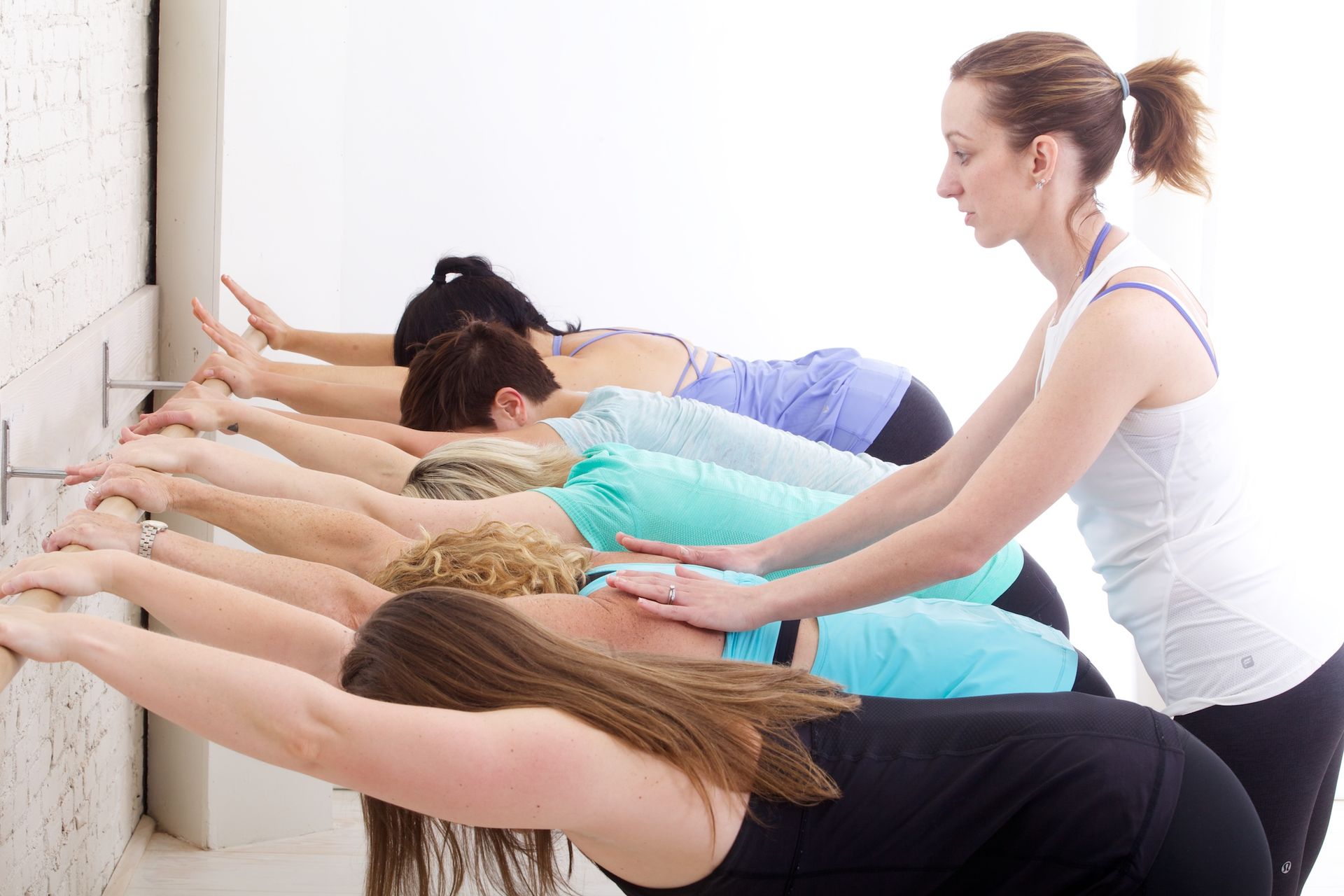
I see this all the time in class. A client will be struggling through an exercise, bracing, holding their breath, doing everything they think they’re supposed to do. Then I change one sentence.
Instead of, “Lift your leg higher,” I might say, “Let your thigh bone slide longer away from your hip.”
And suddenly their face softens.
Their breath returns.
The movement changes.
Nothing about the exercise changed.
Only the language did.
That’s the power of words.
We don’t experience our bodies directly — we experience them through interpretation. Through stories. Through instructions. Through the way someone describes what is happening. If the language is vague, the sensation becomes vague. If the language is aggressive, the body becomes defensive. If the language is thoughtful and precise, the nervous system relaxes enough to actually learn.
This is why I’ve been so focused on cueing lately. Not because I want to sound poetic, but because I want people to feel safe.
When someone understands what they’re supposed to feel, they stop fighting their body. They stop guessing. They stop worrying they’re doing it wrong. They begin to trust the process.
That’s what BarSculpt is really about now — not harder workouts, not fancier choreography, but deeper communication.
In a world that constantly tells us to override our bodies, to ignore pain, to push through fatigue, to earn rest through suffering, we are choosing a different language. One that says: listen, feel, organize, respond.
That doesn’t mean easy.
It means intelligent.
It means we’re not just moving — we’re having a conversation with our nervous system, our muscles, our joints, our breath. And every good conversation depends on words that make sense.
Wittgenstein was right. The limits of our language really do shape the limits of our world.
When you don’t have words for how your pelvis moves, you don’t notice it.
When you don’t have words for how your ribs respond to breath, you can’t change them.
When you don’t have words for how your legs support your spine, you never quite feel stable.
But when the language arrives, so does the sensation.
This is why clients tell me, “That cue changed everything.”
This is why teachers say, “I finally know what to listen for.”
This is why people who felt disconnected from their bodies start to feel at home in them again.
Not because they got stronger overnight.
But because they finally had words that matched what was happening inside.
BarSculpt is becoming a place where that language lives.
A place where movement is not just demonstrated, but explained.
A place where people don’t just copy — they understand.
And when understanding enters the room, everything changes.
Because once you have the words,
you have the world.